
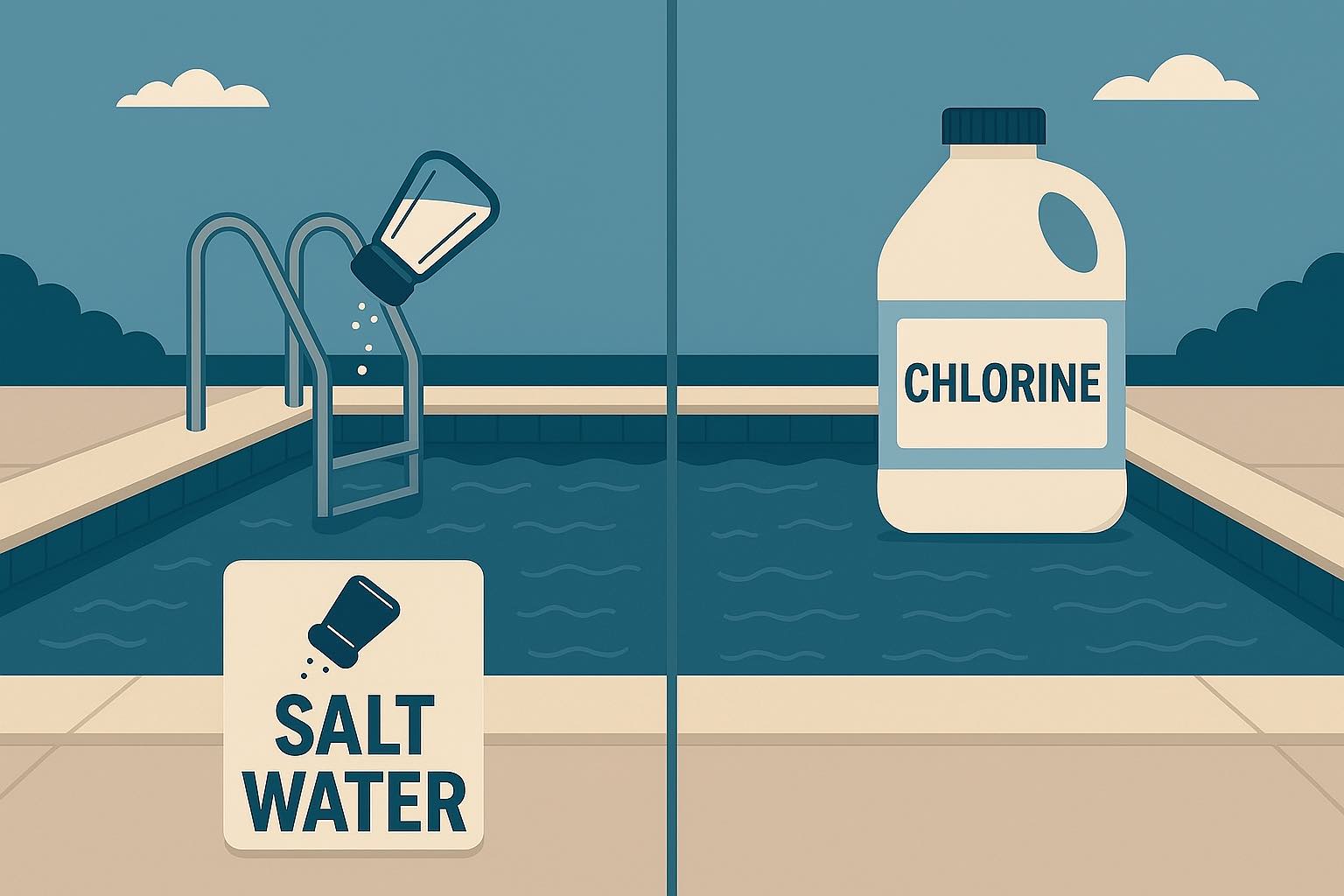
If you’re thinking about installing a new pool or upgrading the one you already have, one of the first decisions is whether to go for a salt water pool or a chlorine pool. Both systems keep your water clean and safe, but they work in very different ways. Some pools feel softer on the skin and eyes, while others demand more hands-on maintenance. Choosing the right system can save you time, money, and irritation, keeping swimming comfortable and stress-free all year round.
The Difference Between Salt and Chlorine Pools
At the heart of every pool is chlorine, which keeps the water safe and clean. The key difference between a salt water pool and a traditional chlorine pool lies in how that chlorine is introduced. In a chlorine pool, tablets, liquid, or granules must be added manually on a regular basis, requiring careful monitoring to maintain the correct levels. Salt water pools, on the other hand, use a salt chlorinator that converts salt into chlorine automatically through electrolysis. Essentially, the choice comes down to whether you want to handle the chlorine yourself or let the system manage it for you. This is often what people mean when comparing salt water pool vs chlorine pool.
Pros and Cons of Chlorine Pools
Pros:
- Lower upfront cost – Installing a traditional chlorine pool is usually cheaper than a saltwater system because it uses simpler equipment, plumbing, and setup, making it an accessible choice for most homeowners.
- Effective sanitisation – Chlorine kills bacteria, algae, and other contaminants efficiently. When added to water it forms hypochlorous acid, which destroys pathogens quickly, keeping your pool hygienic, safe, and ready for swimming.
- Familiar system – Most pool technicians know chlorine pools well. Routine tasks such as balancing pH or shocking the water are widely understood, making upkeep straightforward, reliable, and stress-free for pool owners.
Cons:
- Ongoing chemical needs – Chlorine must be added regularly, whether tablets, liquid, or granules. This requires consistent monitoring, careful dosing, and ongoing attention to maintain balanced, safe, and hygienic swimming water.
- Smell and irritation – Chlorine can produce a strong smell, stinging eyes, dry or itchy skin, and sometimes cause fading of swimwear, which can make swimming less comfortable for sensitive swimmers.
- Frequent testing required – Water chemistry in a chlorine pool must be monitored and adjusted frequently. Failing to do so may allow bacteria or algae growth, making regular testing essential for safety and cleanliness.
Pros and Cons of Saltwater Pools
Pros:
- Gentler water – Chlorine generated from salt is softer on the skin and eyes, leaving water feeling smooth and comfortable, while reducing irritation, dryness, and the strong smell commonly associated with traditional chlorine pools.
- Lower ongoing maintenance – A salt chlorinator automatically produces chlorine, stabilising water levels and reducing the need for manual dosing, so pool owners spend less time adding chemicals and balancing the water themselves.
- No harsh chlorine smell – Saltwater pools feel fresher and more natural, with a mild scent. This creates a more enjoyable swimming experience for families, children, and anyone sensitive to strong chlorine odours.
Cons:
- Higher installation effort – Saltwater pools need a chlorinator and plumbing adjustments during setup, which adds complexity to installation, requires more specialised knowledge, and increases the initial effort compared to a simple chlorine system.
- Equipment wear – Salt is naturally corrosive and can damage metal fittings, pool surfaces, or heaters if not carefully managed. Owners need to monitor equipment and may need corrosion-resistant materials to prevent issues.
- Occasional cell maintenance – The salt chlorinator cell collects scale and requires periodic cleaning. Over time, the cell may need replacement, so while ongoing chemical use is lower, equipment upkeep is necessary.
Comparing Cost, Maintenance, and Comfort for Salt and Chlorine Pools
When choosing between a saltwater and a chlorine pool, cost is often a major consideration. The table below compares installation, maintenance, repairs, and water comfort.
| Factor | Chlorine Pool | Salt Water Pool |
|---|---|---|
| Installation | ✔ Generally cheaper to set up | Requires a salt chlorinator, increasing upfront cost |
| Maintenance | Needs regular chemical purchases | ✔ Uses salt, which is cheaper (chlorinator may eventually need replacement). For tips on keeping water soft and comfortable, see our step-by-step tips on how to maintain a salt water swimming pool |
| Repairs | ✔ Standard pool parts (pumps, filters) – generally simple and widely available. | More complex system, servicing or replacement can be pricier |
| Water feel & comfort | Standard chlorine can irritate skin and eyes | ✔ Feels soft and “ocean-like”. Virtually no chlorine smell. Saltwater is gentler on skin, eyes and ideal for frequent swimmers and families |
Which Pool System is Best for You?
There’s no one-size-fits-all answer. The best choice depends on your priorities and budget. If you want lower upfront costs and don’t mind more hands-on maintenance, a chlorine pool is a proven, reliable option. It sanitises effectively and uses simple equipment, though regular chemical dosing and careful monitoring are required.
If you prefer softer, fresher-feeling water with less smell or irritation, a saltwater pool may suit you better. Salt systems reduce manual dosing, which is ideal for busy families. The setup cost is higher, and occasional chlorinator maintenance and attention to potential corrosion are necessary.
Ultimately, consider how often you swim, your family’s sensitivity to chlorine, and how much maintenance you want. With the right chemicals, a well-set chlorinator, and good filtration, your pool can stay sparkling year-round.


