
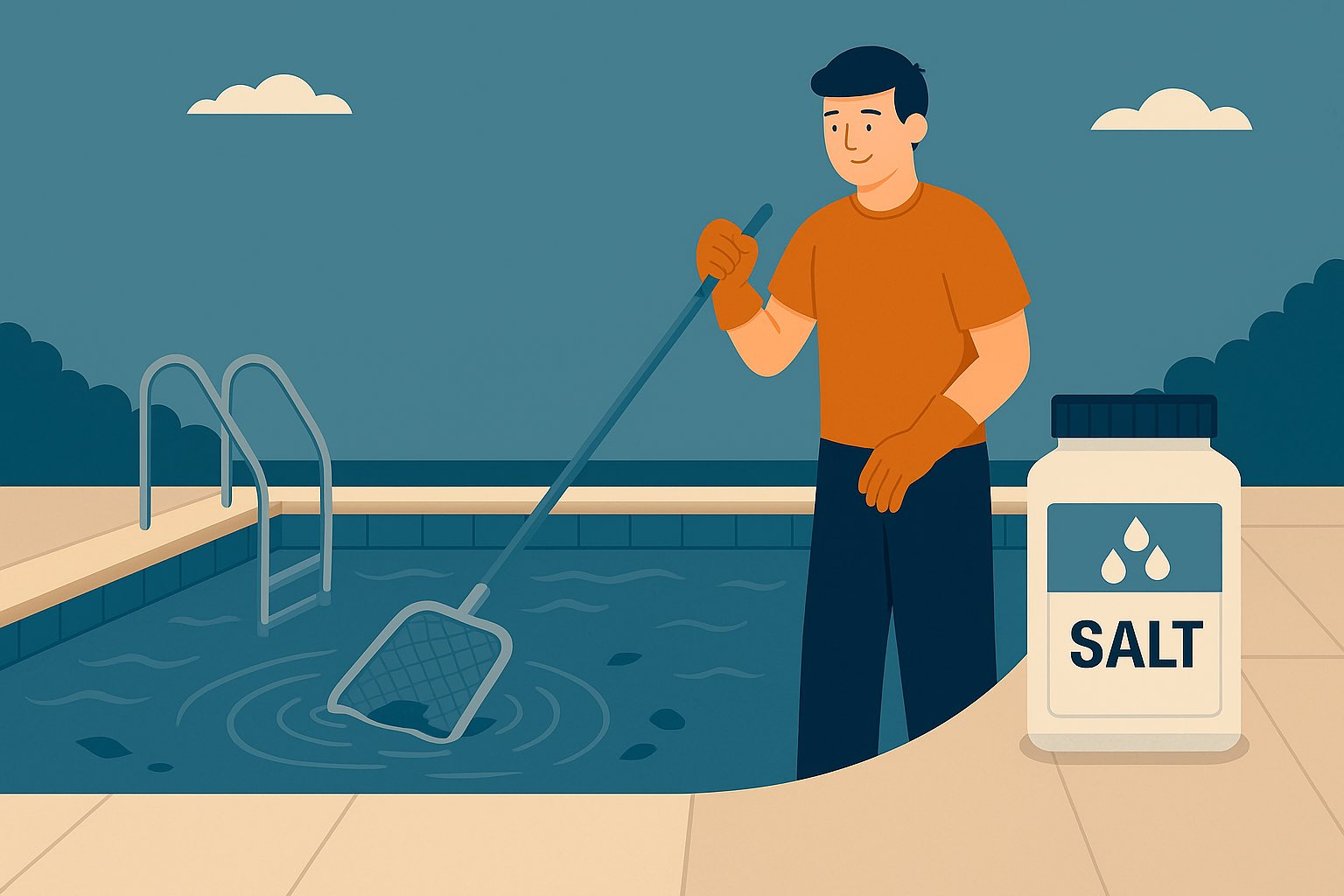
Owning a salt water swimming pool is a dream for many homeowners, but keeping it clean, balanced, and fully functional can feel overwhelming. Maintaining your pool is easier than it seems and by following our step-by-step salt water pool maintenance tips you can keep your water crystal clear and inviting all year round.
With the right knowledge about testing water chemistry and caring for your equipment, you can prevent even minor issues before they become major problems.
Understanding Salt Water
A saltwater pool contains only about 1/12 of the salt found in ocean water, making it gentle on the skin while still providing a natural chlorine alternative. Using a salt chlorination system, dissolved salt is converted into chlorine, sanitising the water without heavy doses of traditional chlorine. This creates a softer, more enjoyable swimming experience. Proper maintenance ensures your pool operates efficiently, prevents scale and corrosion, reduces chemical costs, and keeps the water clear and inviting throughout the season.
Common Challenges with Salt Water Pool Maintenance
Even with a saltwater pool’s simplified chlorine system, homeowners often encounter maintenance hurdles. Knowing what to watch for can save time, money, and frustration. Many common challenges include:
- Cloudy water: Often caused by insufficient chlorine, poor circulation, or high debris levels.
- Salt corrosion or scale build-up: Can occur around pool edges and equipment if salt levels or pH aren’t monitored.
- pH imbalance: Affects water clarity and can irritate skin and eyes.
- Algae growth: Can appear on pool walls or floors if circulation and sanitizer levels are inconsistent.
- Equipment issues: Pumps, filters, and chlorinators can become clogged or wear prematurely without proper care.
Ignoring these issues can lead to equipment damage, costly repairs, and a pool that’s unsafe to swim in. Regular monitoring and prompt adjustments prevent minor issues from turning into major problems. Staying proactive is the key to keeping your pool healthy and enjoyable.
Salt Water Pool Care Products and Tools
Keeping your salt water pool in top condition requires the right tools and products. Having these on hand makes regular maintenance easier, helps prevent problems, and ensures your pool stays clean and balanced all year round.
- Pool test kit: To regularly check chlorine, pH, alkalinity, stabiliser, and calcium levels.
- Salt chlorinator: Ensures salt is converted into the correct amount of chlorine.
- pH increaser/decreaser or alkalinity adjusters: To maintain proper water balance.
- Optional: A digital salinity meter, pool robot cleaner or pool vacuum, skimmer, and pool brush will make routine cleaning easier. Using high-quality, pool-grade salt and following manufacturer guidelines for equipment ensures longevity and efficiency.
Step-by-Step Salt Water Pool Maintenance Tips
Step 1: Test your water regularly
Test chlorine and pH at least weekly (every 2–3 days in summer is ideal), stabiliser (CYA) and calcium monthly, and salt monthly or after heavy rain/top-ups. Retest after pool parties or severe weather.
Step 2: Check salt levels
Aim for a salinity between 2,700 and 3,400 ppm, or check your system’s manual for the exact range. Test monthly or after dilution events like heavy rain. Adjust by adding pool-grade salt as needed and ensure your salt chlorinator is functioning.
Step 3: Clean the pool surfaces and filters
Skim debris daily, vacuum weekly, and brush the pool walls and floor to prevent algae and scale. Backwash filters as recommended, usually once a week or per manufacturer instructions.
Step 4: Maintain pH and chlorine levels
Keep pH between 7.2 and 7.6 and free chlorine at 1–3 ppm. Ensure chlorine is stabilised with CYA at 30–50 ppm (up to 70–80 ppm in high-UV regions). Note: Higher CYA levels require slightly higher chlorine to remain effective. Maintain calcium hardness between 200–400 ppm (a little higher if you have a concrete pool) to prevent corrosion or scaling.
Step 5: Monitor equipment and circulation system
Check pumps, skimmers, and filters for clogs or reduced flow. Clean the salt chlorinator cell periodically to prevent scale build-up and ensure even chlorine distribution.
Step 6: Seasonal maintenance tips
During summer, increase the frequency of cleaning and closely monitor chlorine levels, as high sun exposure can reduce its effectiveness.
In winter, use a pool cover to keep debris out, regularly check water levels, and adjust your chlorinator settings as needed to maintain balanced water while reducing unnecessary chemical use.
Keeping Your Pool at Its Best
Regular salt water pool care ensures your pool stays clean, safe, and enjoyable while maximising the lifespan of your equipment. Cover your pool when not in use to reduce debris and evaporation, remove leaves and heavy debris promptly to avoid strain on pumps and filters, and schedule a professional service once a year for equipment inspection and deep cleaning.
By following these steps, you can enjoy hassle-free salt water pool maintenance and a sparkling swimming area all year round.


